
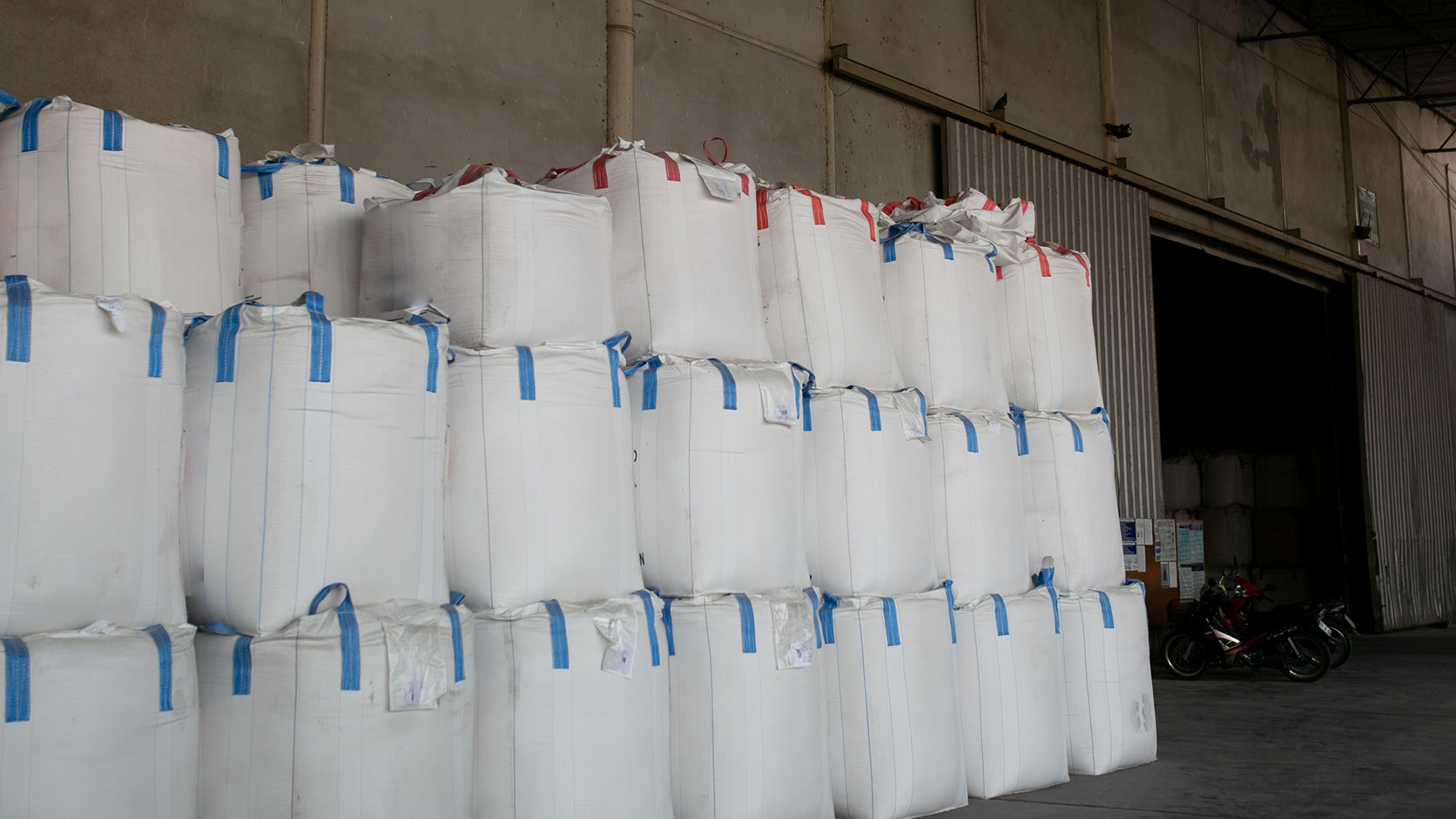
FIBC Construction Types.
The way a bag's body is panelled and stitched determines its strength, squareness, and cost. Here's how our five core construction styles differ.
Construction type refers to how the body panels of an FIBC are cut and stitched together — distinct from loop type, top/bottom style, or anti-static classification. The right construction balances material cost, strength, and how the bag holds its shape when filled.
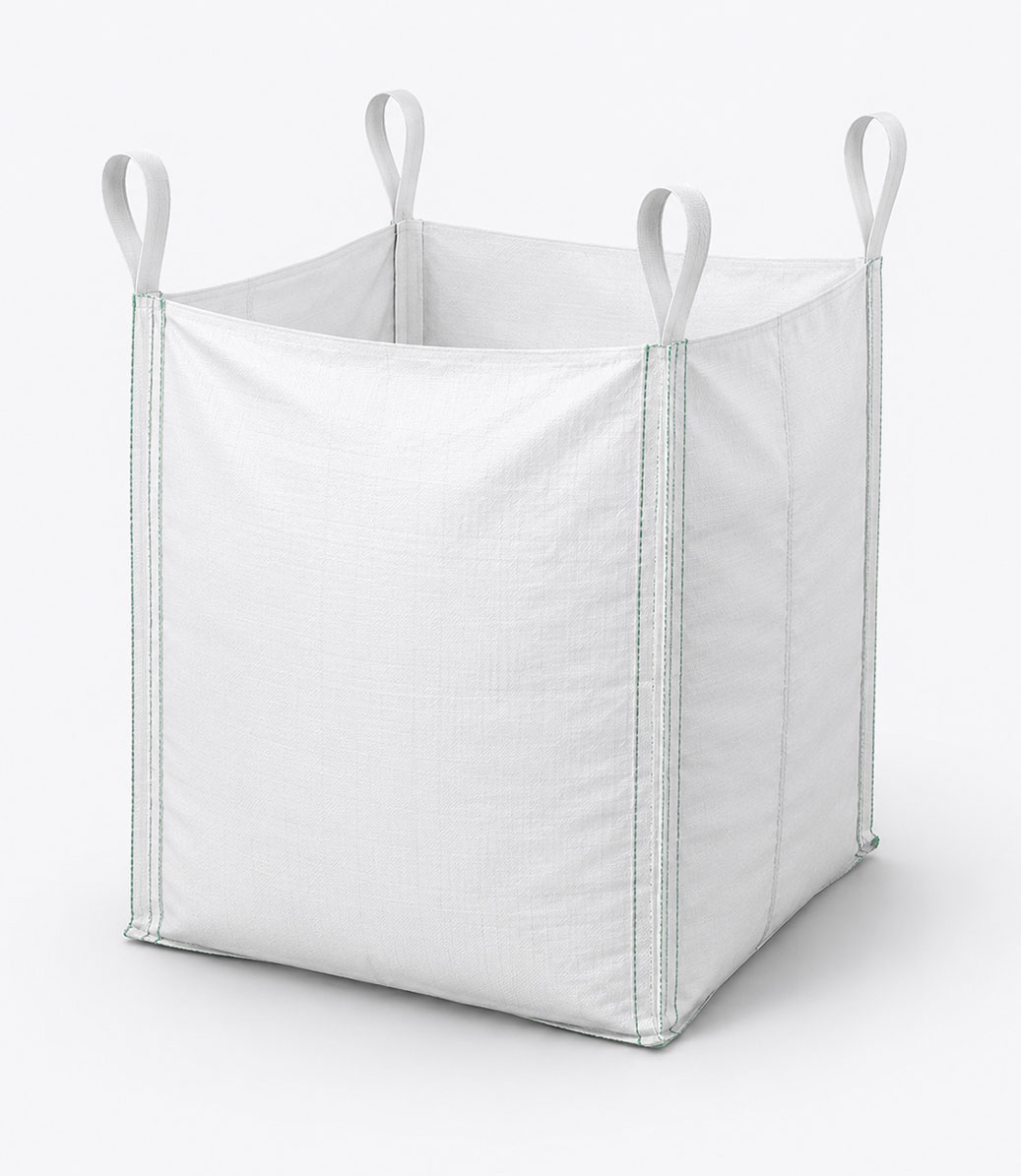
U-Panel
A single piece of fabric is folded into a "U" shape forming the body, base, and one side wall, with two flat panels stitched onto the open sides. Fewer seams mean fewer stress points and a faster, more economical build — the industry-standard choice for general-purpose FIBCs.
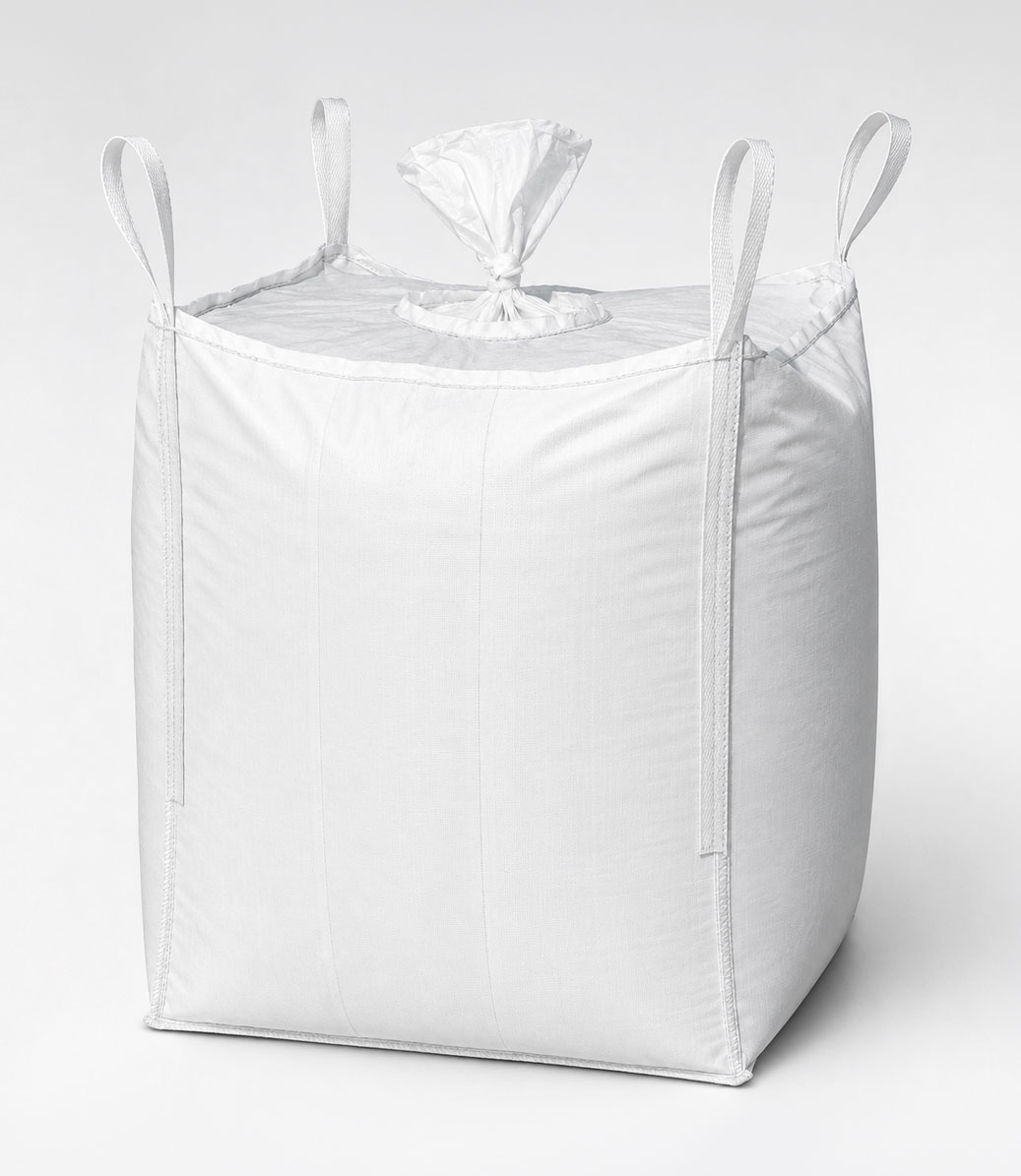
4-Panel
Four separate fabric panels — front, back, and two sides — are cut and stitched together at each corner. This gives excellent dimensional squareness and more usable flat surface for large-format printing, at the cost of additional seams.
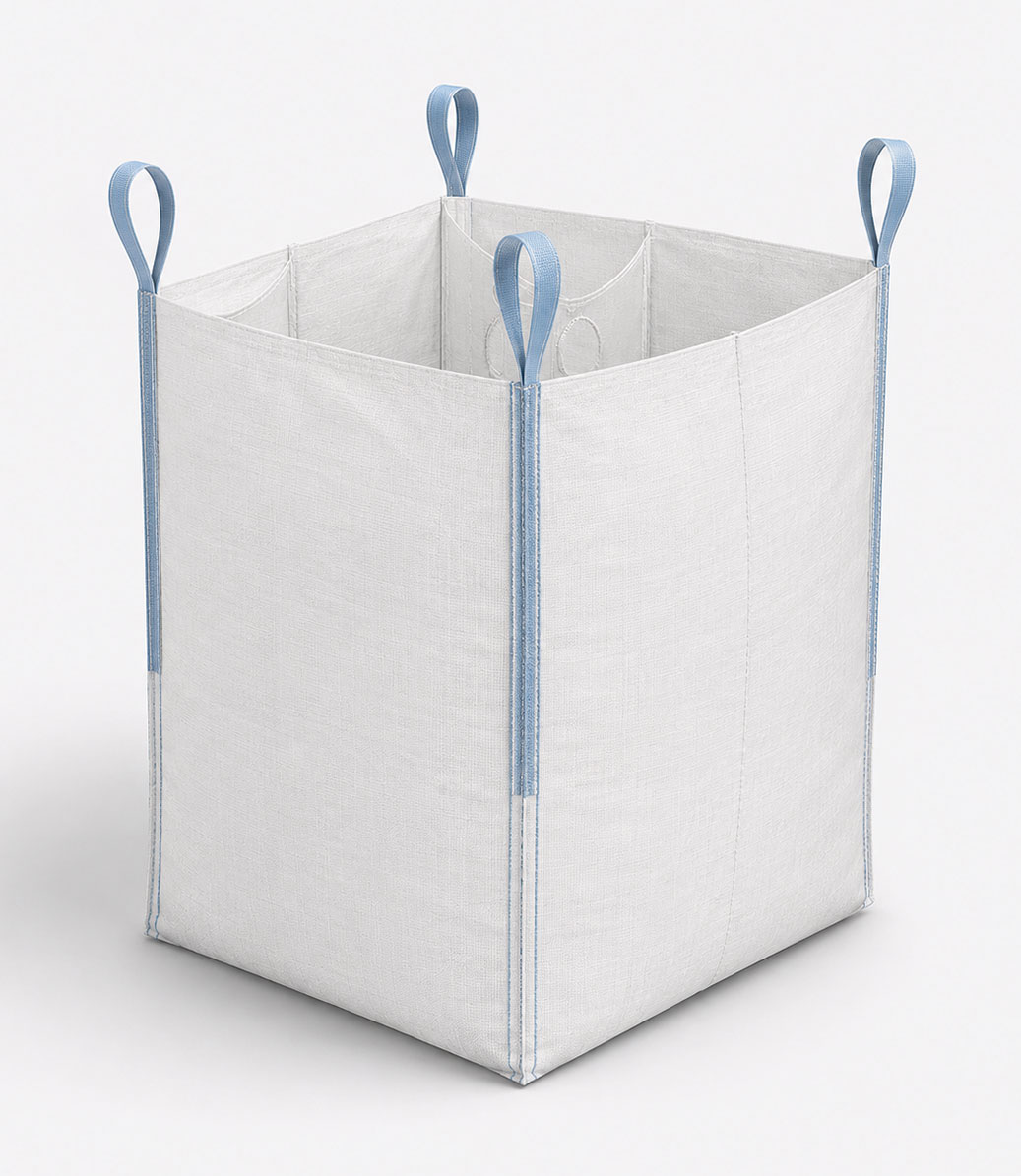
Circular (Tubular)
Woven seamlessly on a circular loom with no vertical side seams at all. The continuous tube of fabric is simply cut to height and closed top and bottom, making it the strongest and most leak-resistant construction for high-SWL applications.
Baffle
Internal fabric baffles are stitched diagonally across each corner, pulling the bag into a true cuboid shape as it fills instead of "pillowing" outward. This maximises pallet and container utilisation and improves stacking stability — often combined with U-Panel or 4-Panel bodies.
Cross-Corner
Lift loops are sewn so each loop's load path crosses to reinforce the opposite corner of the bag, rather than terminating only at the corner it's attached to. This distributes lifting stress more evenly across the body panels, useful for heavier SWL ratings or repeated-use cycles.